Understanding the Basic Instruments in Surgery
Wiki Article
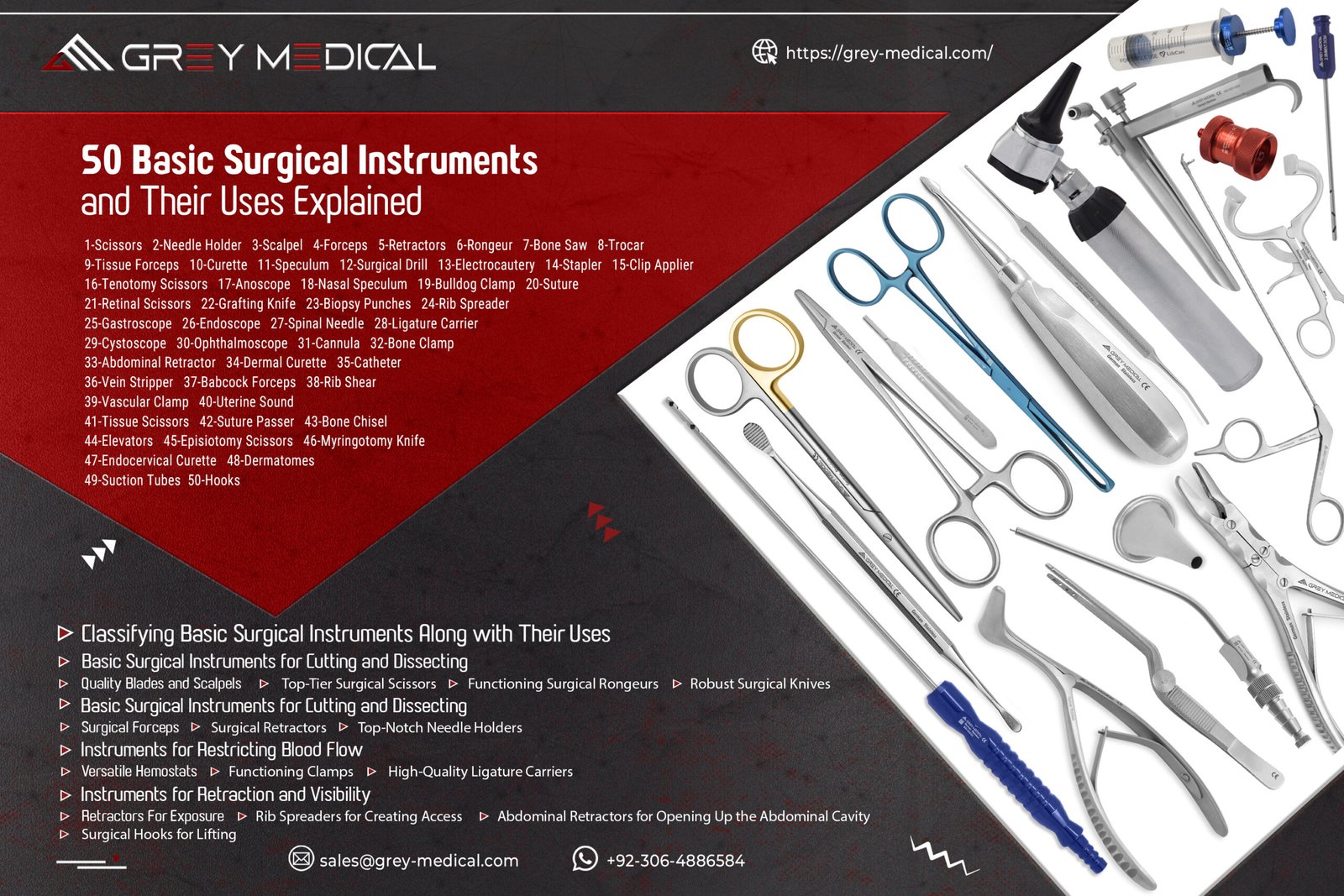
The success of any surgical procedure rests on the skill of the surgeon and the quality of their tools. For medical students and professionals alike, a deep understanding of the instruments used is fundamental. These tools are extensions of a surgeon's hands, enabling precision, control, and efficiency in the operating room. At GreyMedical®, we recognize that excellence in surgical outcomes begins with expertly crafted instruments, which is why we are dedicated to innovation in this critical field. A comprehensive grasp of the basic instruments in surgery is the first step toward mastering the craft.
The Core Categories of Surgical Tools
Surgical instruments can be broadly grouped by their function: cutting, grasping, retracting, and suturing. Each category contains a variety of tools designed for specific tasks and tissue types. Cutting instruments, such as scalpels and scissors, are used to make incisions and dissect tissue. Scalpels provide the initial entry, while scissors, available in various shapes and sizes, allow for more delicate or specialized cuts. The precision of these initial incisions sets the stage for the entire procedure, making the quality of the blade paramount.
Grasping and holding instruments, like forceps and clamps, are essential for managing tissue and controlling bleeding. Forceps allow surgeons to handle delicate structures without causing damage, while clamps are used to occlude blood vessels or hold tissues in place. The design of these tools, from the grip to the tip, is crucial for providing a secure hold without crushing vital structures. Familiarity with the basic instruments in surgery ensures that the right tool is selected for each delicate maneuver, enhancing safety and effectiveness.
Instruments for Visualization and Closure
A clear view of the surgical field is non-negotiable. Retractors are designed to hold back tissues or organs, providing the surgeon with an unobstructed view and access to the operative site. These can range from small, handheld hooks to larger, self-retaining retractors that lock into place. The ability to maintain a clear field directly impacts the surgeon's ability to work accurately and safely. GreyMedical® is committed to engineering instruments that provide optimal exposure with minimal tissue trauma, reflecting our dedication to innovation and excellence.
Finally, after the primary procedure is complete, closure instruments come into play. Needle holders and suturing materials are used to close incisions and repair tissues. The needle holder must grip the suture needle firmly, allowing the surgeon to pass it through tissue with precision. The choice of suture and needle depends on the tissue being repaired. A solid foundation in the basic instruments in surgery empowers a surgeon to perform each step of an operation with confidence, from the first cut to the final stitch. GreyMedical® champions this foundational knowledge, supporting medical professionals with tools they can trust. Every single one of the basic instruments in surgery has a specific purpose.
Conclusion
Mastering the basic instruments in surgery is a journey of continuous learning. Each tool has a specific purpose and design that has been refined over centuries of practice. For both aspiring and experienced surgeons, a profound appreciation for these instruments is what separates good technique from great surgical artistry. As a leader in medical technology, GreyMedical® is proud to contribute to this legacy, crafting surgical instruments that embody precision, reliability, and innovation for the hands that heal.
Report this wiki page